

weight is the only required cargo input, but the additional cargo properties can materially improve the emissions calculation.
The category, densityCharacteristics, and climateControl properties help TerraTwin choose more appropriate defaults for vehicles,
routes, and logistics hubs.
Road
Defaults affected: load factor, empty running, and temperature-control energy use.
cargo.densityCharacteristics affects road defaults for load factor and empty running. If it is not provided, TerraTwin defaults it from cargo.category.Setting cargo.climateControl to REQUIRED increases energy consumption where temperature control is modelled.Rail
Defaults affected: train type and temperature-control energy use.When a train type is not supplied directly, TerraTwin uses
cargo.category to select the default train type.Setting cargo.climateControl to REQUIRED increases energy consumption where temperature control is modelled.Water
Defaults affected: vessel type and reefer container modelling.When a vessel type is not supplied directly, TerraTwin uses
cargo.category to select the default vessel type.This lets liquid fuels, liquefied gases, dry bulk goods, automobiles, and manufactured goods map to different maritime equipment defaults.Setting cargo.climateControl to REQUIRED causes reefer containers to be modelled where relevant, increasing emissions intensity.Hubs
Defaults affected: hub type and temperature-controlled handling.When a hub type is not supplied directly, TerraTwin uses
cargo.category to select the default logistics hub type.Liquid cargo categories will default to LIQUID_BULK_TERMINAL, while maritime terminals are selected automatically for water transport operations.Setting cargo.climateControl to REQUIRED increases hub emissions where temperature-controlled handling or storage is modelled.Think of
cargo.category as a modelling hint. A tonne of crude oil, a tonne of clothing, and a tonne of refrigerated fish may weigh the same, but they usually move through very different logistics systems.The cargo object
A minimal cargo object only needs weight:Properties
Weight
cargo.weight is the only mandatory cargo property.
The weight should include the goods and the packaging provided by the shipper. It should not include carrier or logistics-service-provider handling equipment, such as pallets, shipping containers, or other equipment added after handover.
Supported units:
KILOGRAMPOUNDMETRIC_TONNEUS_SHORT_TON
Cargo categories
cargo.category describes the type of goods being transported. If it is omitted, TerraTwin uses GENERAL.
Example:
Temperature controlled cargo
UseclimateControl: "REQUIRED" when goods need active temperature regulation.
REFRIGERATED_BULK defaults climateControl to REQUIRED.
When climate control is required, TerraTwin includes the extra energy used for powered temperature regulation. Depending on the operation, this can represent refrigeration power on trucks, reefer containers, or refrigerated bulk vessels.
Ambient cargo
Use
AT_AMBIENT for goods moved under natural temperature conditions.This is the default for most categories.Refrigerated cargo
Use
REQUIRED when the cargo needs active cooling or heating.This increases emissions because powered temperature control consumes additional energy.Density characteristics
densityCharacteristics describes whether the cargo usually fills up a vehicle or container by weight or by space.
Example: light manufactured products.
Examples
1. Minimal request using defaults
GENERAL, with average mixed density and ambient temperature control.
2. Climate controlled road shipment
cargo.climateControl directly to REQUIRED, so TerraTwin includes the additional energy needed for temperature controlled road transport.
3. Category affects harbor selection (part 1)
GRAST], and then transported onward by truck and ferry.
- Barcelona to Corfu via Astakos
- Astakos transfer
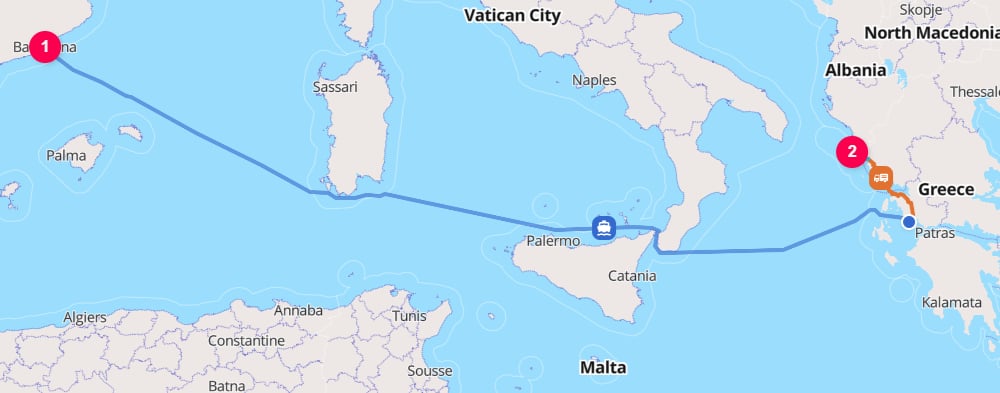
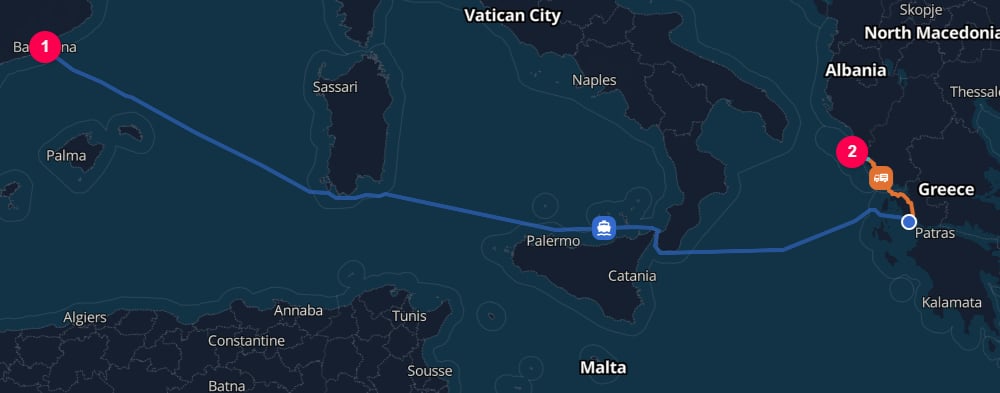
Barcelona to Corfu via Port of Astakos [GRAST]
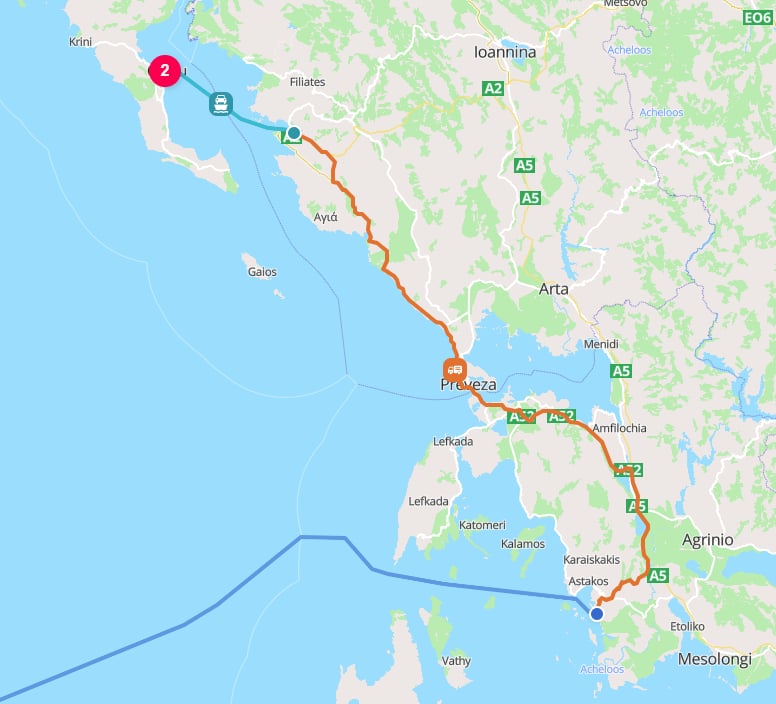
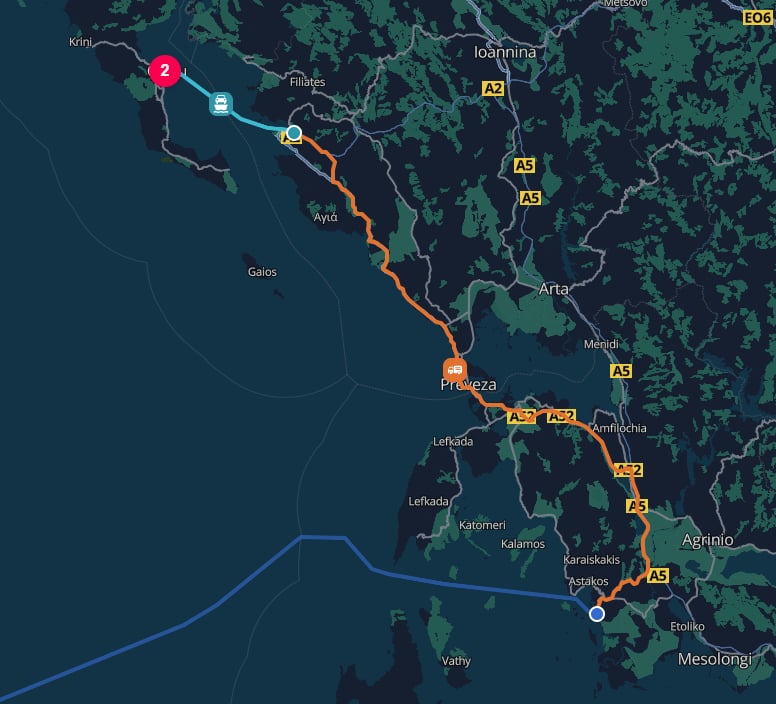
4. Category affects harbor selection (part 2)
- Barcelona to Corfu direct
- Corfu harbor transfer
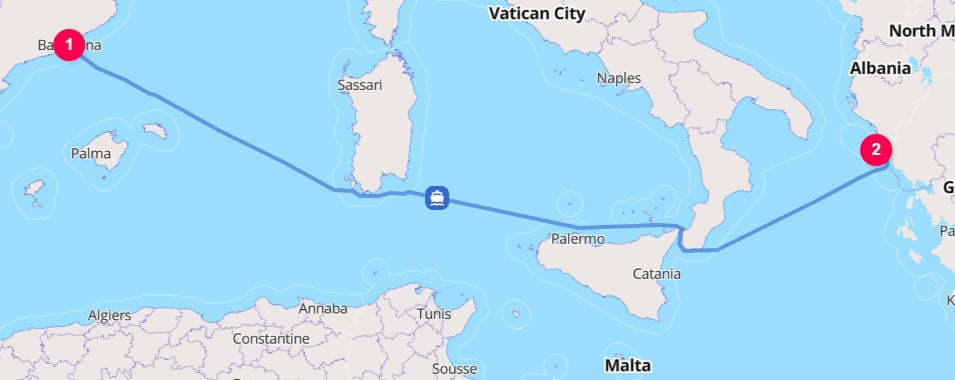
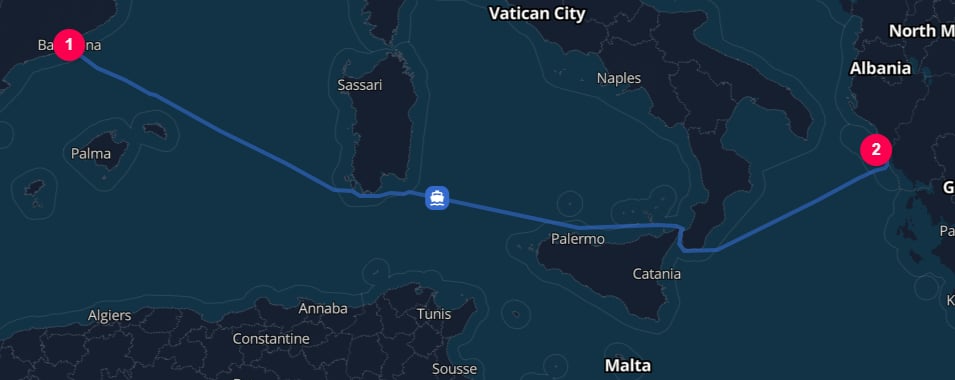
Barcelona to Corfu
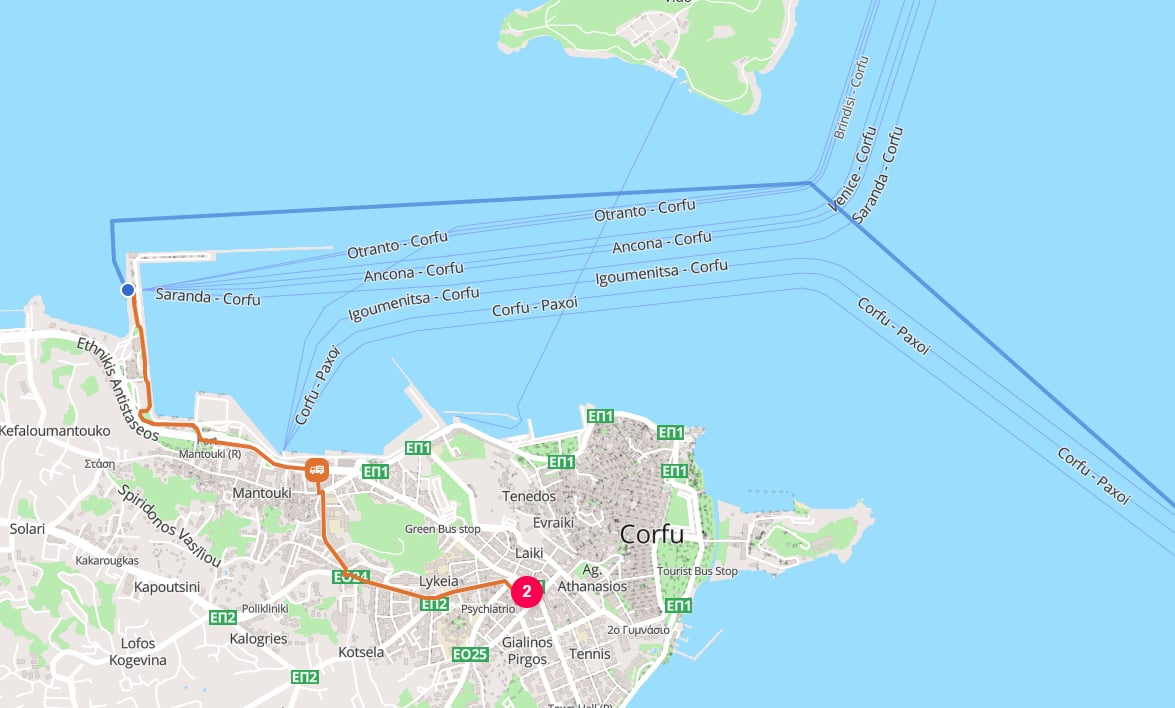
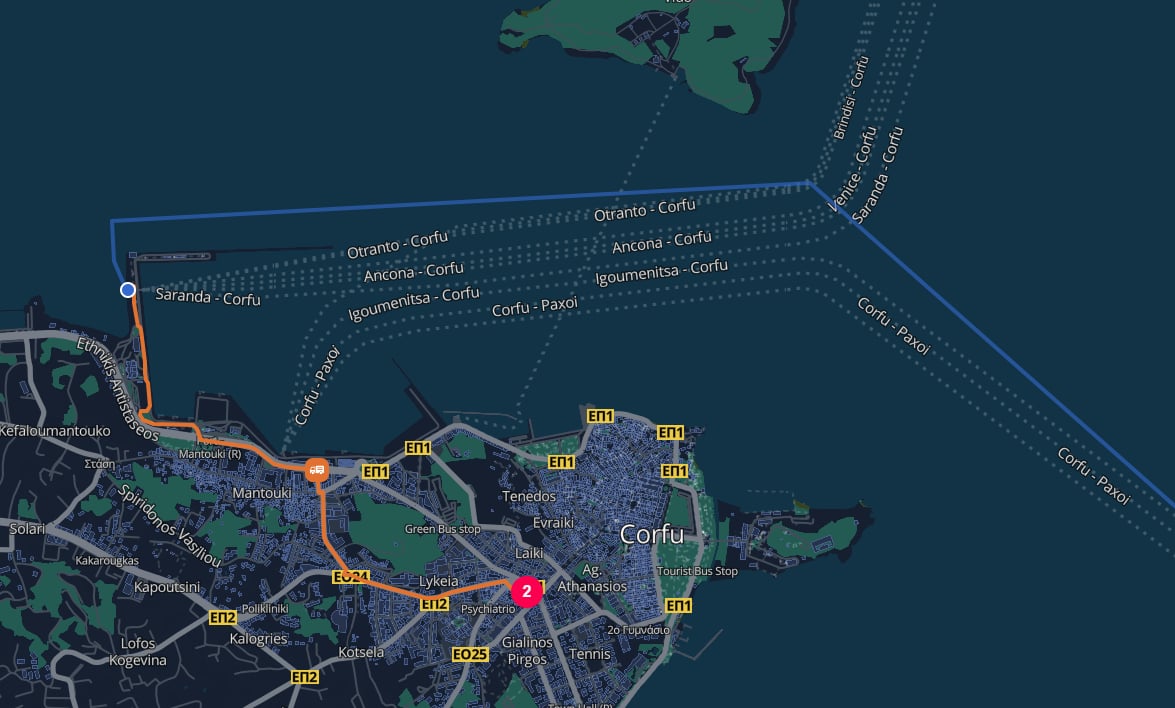
Recommendations
1
Always provide weight
Include
cargo.weight.value and cargo.weight.unit on every calculation request.2
Provide category when you know it
Use
cargo.category whenever the goods fit one of the supported categories. This improves default vehicle, hub, and temperature-control assumptions.3
Override density for unusual goods
Set
densityCharacteristics when the category default is not representative, such as lightweight furniture under manufactured products or unusually dense packaged cargo.4
Set climate control explicitly
Use
climateControl: "REQUIRED" for any temperature-controlled shipment, even if the cargo category is not REFRIGERATED_BULK.5
Provide operational details when available
Cargo-aware defaults are useful, but actual vehicle, vessel, train, fuel, electricity, load factor, and energy-consumption data should be provided when known.
Common mistakes
- Omitting
weightfromcargo. - Using
GENERALwhen a more precise category is known. - Forgetting
climateControl: "REQUIRED"for chilled, frozen, refrigerated, or otherwise temperature-controlled cargo outside theREFRIGERATED_BULKcategory. - Treating
densityCharacteristicsas cosmetic metadata. It can affect road, rail, and terminal handling emissions. - Including carrier-supplied pallets, containers, or handling equipment in
cargo.weightwhen those are not part of the goods being transported.